The Soil Test Feeding Plan
Feed what the soil test asks for: the beds measured instead of the plot, the report read line by line, pounds of product worked from the label, the bag chosen for what it adds that the soil does not need, and one season's nitrogen split into feedings that add up
GardenLetter's Fertilizer Calculator gives one feeding for a typical plant at a typical stage, and a frequency. It has never seen your soil, and it never adds the feedings up. Three 4 x 8 ft beds typed in as the whole 12 x 20 ft plot get 2.5 times the product they need, and fed every 2 to 3 weeks for twelve weeks they get four to six times the nitrogen an example soil test asks for in the whole season. The Soil Test Feeding Plan carries the calculator through. Measure the beds, not the paths. Copy your soil test report line by line and strike out every nutrient it rates High. Turn pounds of nitrogen into pounds of product by dividing by the fraction on the label, the way extension services teach it. Choose the bag by what rides along: in the worked example, of the bags that cover the potash the report asks for, 24-8-16 brings the least phosphate to a soil already High in it. Then fix the season's total first and split it into feedings that add back up to it: 0.8 lb of 24-8-16 for the whole season, 2.1 oz per bed at planting. Every figure is computed by the calculator's own code and every example is tagged as one; quotations come from Iowa State, Mississippi State, South Dakota State, Colorado State and UNH Extension. It covers fertilizer only, says the label wins when its rate is lower, and names no brand. Included: a 24-page printable plan with 7 steps, a soil test sheet, a feeding plan sheet, a bag comparison sheet, a season feeding log, a reference table for ten products and a quickstart, plus a personalised sheet worked from the numbers you entered in the calculator.
Look inside
Two full pages from the plan, exactly as printed. Click either to read it at full size before you decide.
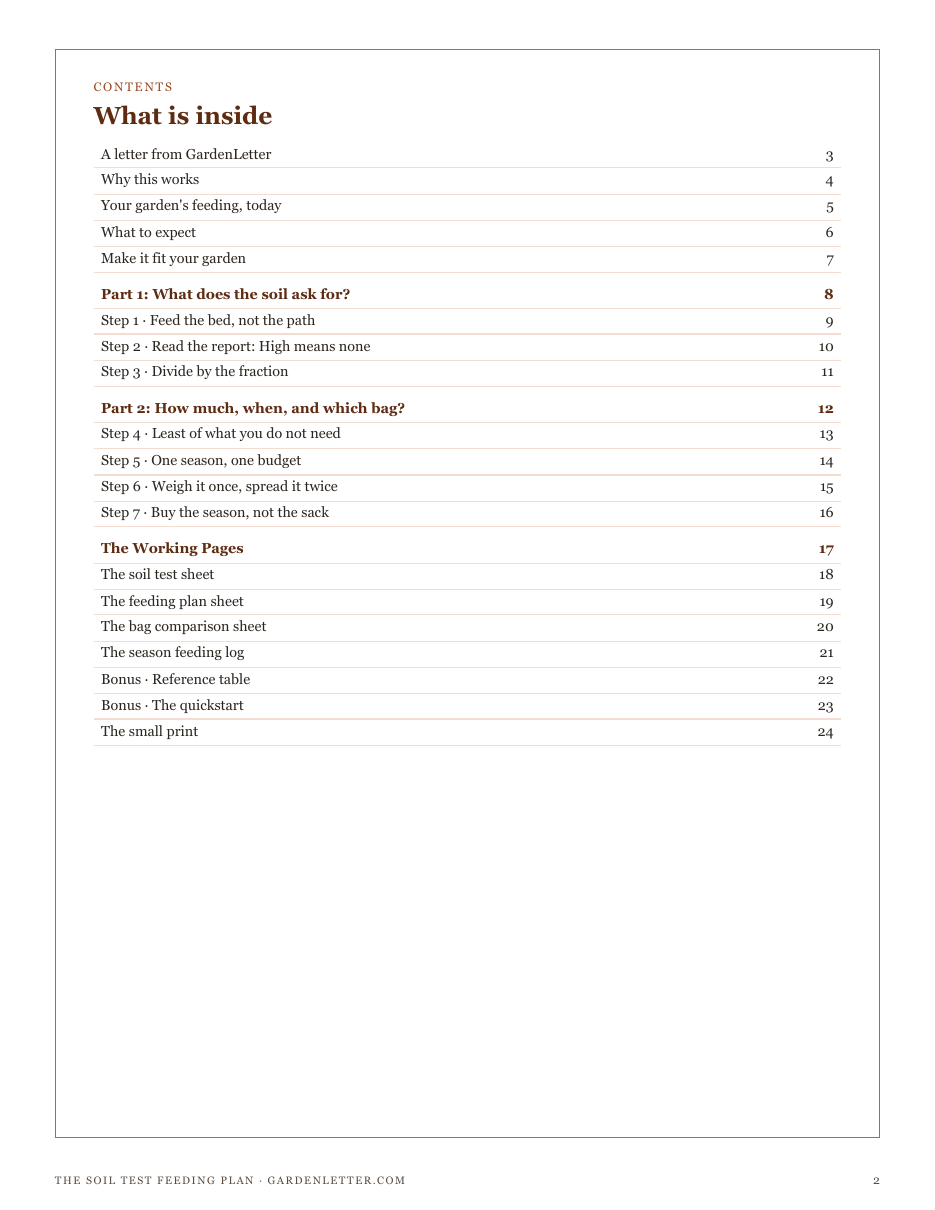
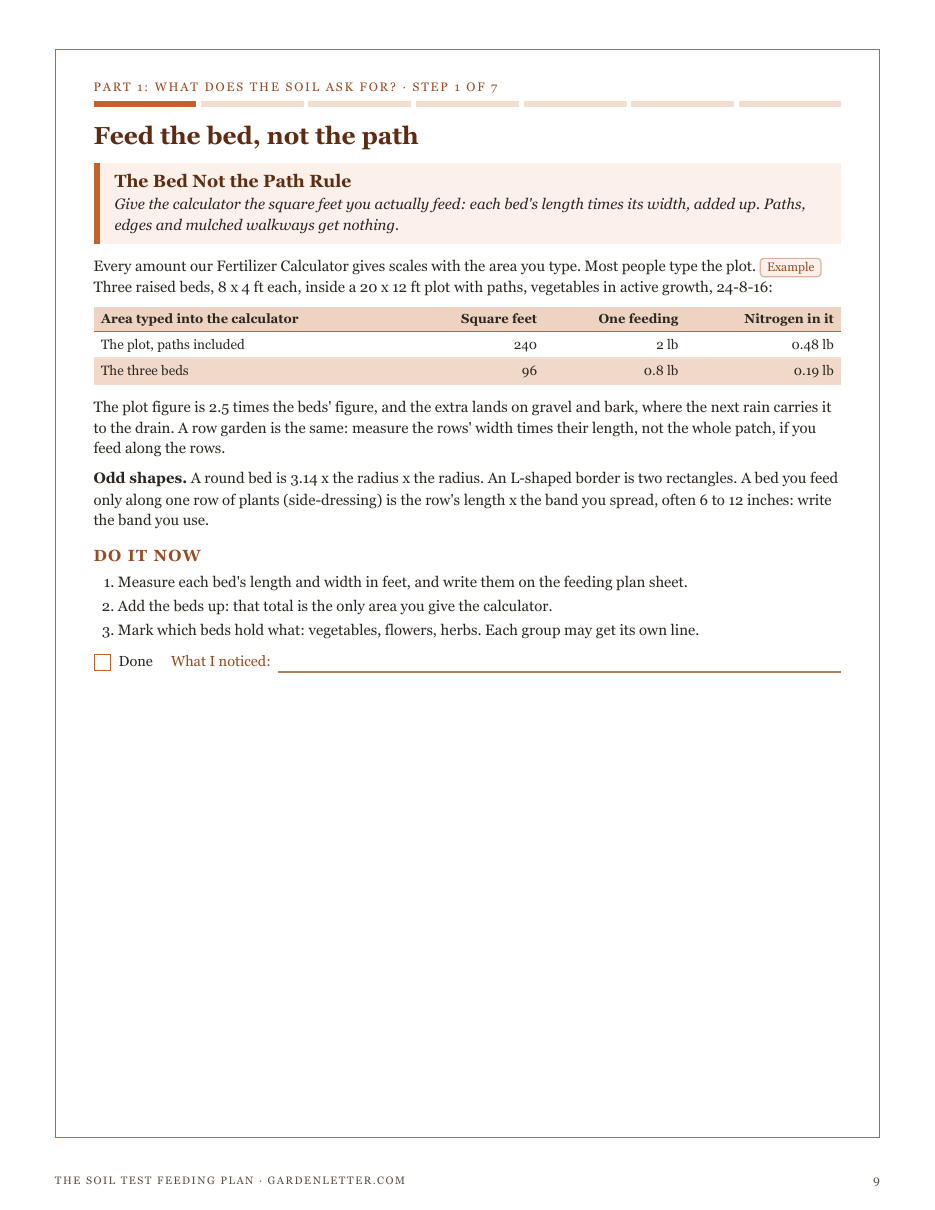
What is in it
- Step 1: the beds measured and added up, the paths left out, against the whole plot typed into the calculator
- Step 2: the soil test report read line by line, with every nutrient rated High struck out
- Step 3: pounds of a nutrient turned into pounds of product for the ten products the calculator knows, per 1,000 sq ft, per 100 sq ft and per bed
- Step 4: every bag set by nitrogen, with the phosphate and potash that ride along compared against the report
- Step 5: one season's nitrogen fixed first and split into feedings that add back up to it, against the calculator's frequency
- Step 6: one cup weighed once, cups per bed for each feeding, spreading in two passes, and the label rate when it is lower
- Step 7: bags compared by the price of a pound of nitrogen, and the smallest bag that holds the season
- Four working pages: a soil test sheet, a feeding plan sheet, a bag comparison sheet and a season feeding log
- A reference table for ten products and the calculator's stage targets, and a quickstart that closes the score loop
- A personalised sheet: your feeding worked by nitrogen, what it brings along, the season it adds up to, and the same nitrogen from every other bag
- ✓ 24 printable pages
- ✓ 10 sections, worksheets and templates
- ✓ A second PDF worked out from the numbers you enter
- ✓ No account needed, just an email address
- ✓ Instant download; link valid 7 days
Price includes any taxes. Sold by GrabURL, who handle checkout and support. The charge appears on your statement as GrabURL.
The plan picks up where the free Fertilizer Calculator leaves off. The calculator gives one feeding, set by nitrogen, for a typical plant at a typical stage, and a frequency; it has never seen your soil and it never adds the feedings up. The plan carries it through: the beds measured instead of the plot (the Garden Layout Plannerhelps), the soil test report read line by line with every High struck out, pounds of product worked from the label, the bag chosen for what it adds that the soil does not need, one season’s nitrogen split into feedings that add back up to it, a cup weighed once, and the smallest bag priced per pound of nitrogen. Every figure in it is an example for you to replace. It covers fertilizer only: weed killers, weed-and-feed and insect or disease sprays follow their own labels.